
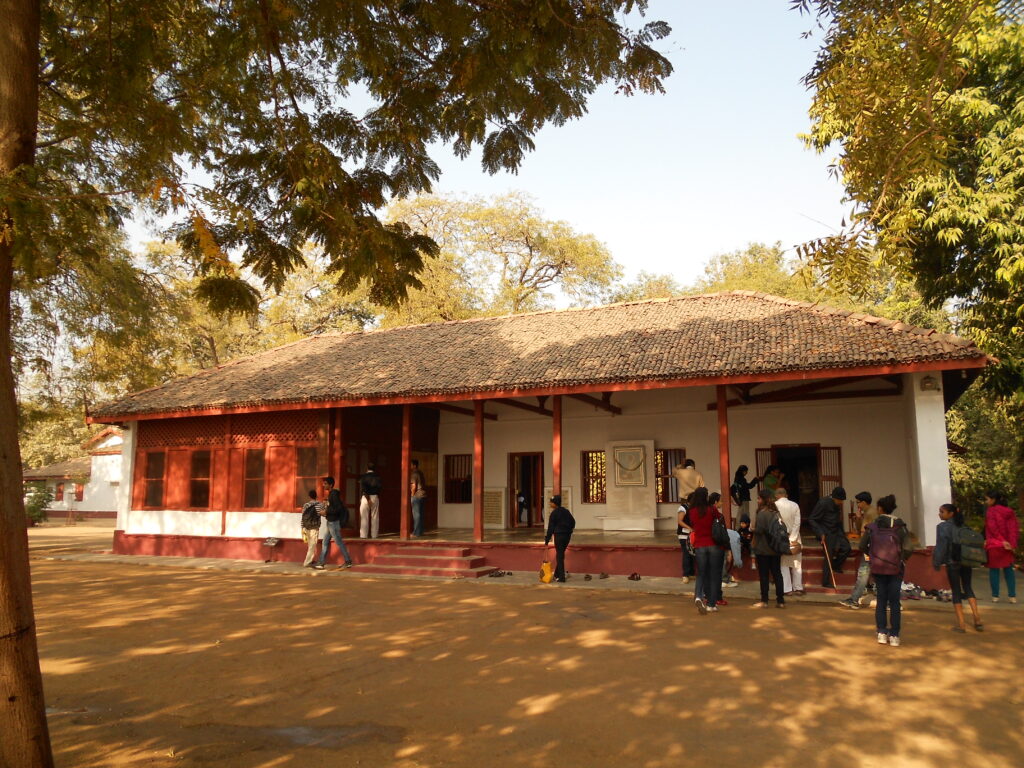
Mahatma Gandhi, also known as Mohandas Karamchand Gandhi, was one of the greatest leaders in world history. He played a central role in India’s freedom struggle and inspired global movements for civil rights through his philosophy of non-violence (Ahimsa) and truth (Satya).
Early Life of Mahatma Gandhi
Mahatma Gandhi was born on 2 October 1869 in Porbandar, Gujarat, India. His father, Karamchand Gandhi, was a chief minister of a princely state, and his mother, Putlibai, was a deeply religious woman who influenced Gandhi’s values of simplicity and discipline.
Gandhi completed his early education in India and later went to London to study law. After becoming a barrister, he returned to India but struggled to establish his legal career initially.
Gandhi in South Africa
In 1893, Gandhi went to South Africa for legal work. There, he faced severe racial discrimination, which transformed his life. These experiences led him to develop the idea of Satyagraha, a method of peaceful resistance against injustice.
During his time in South Africa, Gandhi fought for the civil rights of Indians and proved that non-violent protest could bring social and political change.
Role in India’s Freedom Struggle
Gandhi returned to India in 1915 and soon became the leader of the Indian National Movement. He organized and led several major movements:
- Non-Cooperation Movement (1920)
- Salt March / Dandi March (1930)
- Quit India Movement (1942)
Through these movements, Gandhi united millions of Indians and challenged British rule without using violence. His leadership made him the moral voice of the nation.
Principles and Ideology
Mahatma Gandhi’s life was guided by strong principles:
- Ahimsa (Non-Violence) – Rejecting violence in all forms
- Satya (Truth) – Commitment to honesty and moral integrity
- Simple Living – Wearing khadi and promoting self-reliance
- Unity and Equality – Opposing untouchability and social injustice
These ideals influenced leaders like Martin Luther King Jr. and Nelson Mandela.
Death of Mahatma Gandhi
Mahatma Gandhi was assassinated on 30 January 1948 in New Delhi. His death shocked the world, but his teachings continue to guide humanity toward peace and justice.
Legacy of Mahatma Gandhi
Mahatma Gandhi is remembered as the “Father of the Nation” in India. His birthday, 2 October, is celebrated as Gandhi Jayanti and observed globally as the International Day of Non-Violence.
Even today, Gandhi’s message of peace, tolerance, and non-violence remains highly relevant in a world facing conflict and inequality.
Conclusion
The biography of Mahatma Gandhi is not just the story of one man but a lesson for all humanity. His life proves that truth and non-violence are powerful tools that can change nations and inspire generations.
SEO-Friendly Searchable Keywords
- Mahatma Gandhi biography
- Mahatma Gandhi life history
- Father of the Nation India
- Gandhiji biography in English
- Mahatma Gandhi freedom fighter
- Gandhi non violence movement
- Dandi March Mahatma Gandhi
- Quit India Movement leader
- Mahatma Gandhi essay for blog
- Gandhiji full biography